

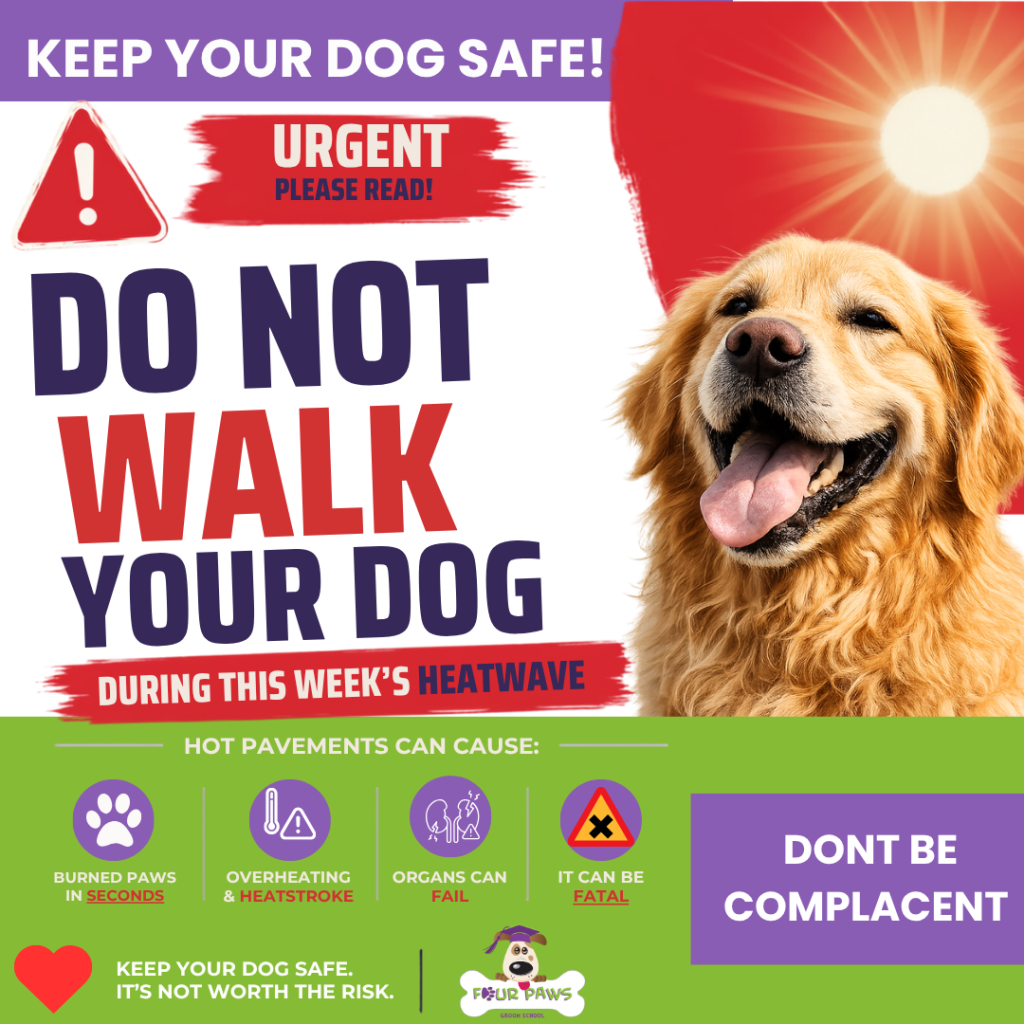
Heatwaves Can Kill, Use These Important Tips to Protect Your Dog
When the weather gets warmer, it can be tempting to keep your dog’s usual walking routine. However, during a heatwave, walking your dog can become dangerous very quickly. Hot pavements, rising body temperature and limited shade can all put dogs at risk of burned paws, overheating and heatstroke.
Dogs do not cool down in the same way humans do. They mainly rely on panting to regulate their temperature, which can become difficult in hot or humid weather. This means they can overheat quickly, especially during exercise.
Why hot pavements are dangerous
Pavements, roads and artificial surfaces can become extremely hot in the sun. If the ground is too hot for your hand, it is too hot for your dog’s paws. Dogs Trust recommends the five-second tarmac test: place your hand on the pavement for five seconds; if it feels too hot, wait until later when the ground has cooled.
Burned paw pads can be painful and may cause limping, licking, redness, blistering or reluctance to walk. Missing one walk is always safer than risking injury.
When should you walk your dog?
On warm days, walk your dog early in the morning or later in the evening when temperatures are cooler. Keep walks shorter, choose shaded routes, take water with you and avoid strenuous exercise. During very hot weather, it may be safest to skip the walk completely and keep your dog indoors in a cool room.
Instead of a walk, try calm indoor enrichment such as:
- Puzzle feeders
- Scent games
- Basic training practice
- Frozen treats
- Gentle brushing
- Rest in a cool, shaded space
Signs your dog may be overheating
It is important to act quickly if your dog shows signs of heat stress or heatstroke. Warning signs can include heavy panting, excessive drooling, lethargy, wobbling, difficulty breathing, vomiting or collapse.
Dogs who are older, overweight, flat-faced, very young or have health conditions may be at higher risk in hot weather, so extra care should be taken.
What to do if your dog gets too hot
If you think your dog is overheating, stop all activity immediately. Move them into shade or a cool area, offer small amounts of water and begin cooling them down. The RSPCA advises “cool first, transport second,” meaning you should start cooling the dog before taking them to the vet.
Use cool water on the body, especially around the neck, stomach and thighs, and create airflow with a fan if possible. Do not place damp towels over your dog’s body, as this can trap heat. If you are worried, contact your vet immediately.
Keep your dog safe: it’s not worth the risk
Your dog will not suffer from missing one walk, but walking during extreme heat can have serious consequences. Hot pavements can burn paws, exercise can lead to overheating, and heatstroke can be fatal if not treated quickly.
During a heatwave, the safest choice is simple: keep your dog cool, keep them hydrated and save walks for when the temperature drops.
Need more pet care advice? Read more on our website and follow us for practical tips to keep your dog happy, healthy and safe.
Interested in one of our courses?
Click HERE
